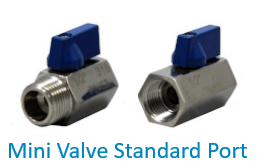
The difference between a Full Port and a Standard Port Valve
- The main difference between a full port ball valve and a standard port ball valve is the size of the valve's internal bore or opening in the ball, compared to the pipe it's connected to:
- Full port: The valve's internal ball opening or port has the same internal diameter as the pipe it is connected to.
- Standard port: The valve's internal ball opening or port is one size smaller than the pipe's diameter it is connected to.
What is a Full Port Ball Valve?
- A full bore or full port ball valve is a type of valve designed to have an internal diameter (ID) that is the same size as the pipeline it connects to. This results in no restriction in the flow when the valve is opened fully.
What is a Reduced Port Ball Valve?
- A reduced bore or reduced port ball valve is a type of valve that has an internal diameter (ID) that is one size smaller than the pipe it is connected to. This causes a slight restriction in flow which could result in a slight pressure drop.

The Advantages and disadvantages of Full Port vs Standard Port
The characteristic difference between full bore and reduced bore valves can be found in the size of the internal ball and the corresponding size of the hole in the ball. This size difference in the bore affects performance and determines which applications are suitable for the valve.
Full Port Advantage:
- ● Maximum flow rate
- ● Minimum pressure drop
- ● Internal diameter equal to the pipe diameter
- ● Minimal flow restriction (little to no resistance to the flow)
- ● Will maintain a constant flow rate
- ● Straight flow path, no turbulence
- ● High Flow Coefficient, allows high flow volume with minimal restriction
- ● Little chance of cavitation
- ● More efficient than standard port because they have a larger internal diameter and less pressure drop.
Full Port Disadvantage:
- ● Higher cost than standard port
- ● Larger size due to larger internal diameter
Standard port Advantage:
- ● Cost effective
- ● Compact body design
- ● More suitable to small spaces than full port
Standard Port Disadvantage:
- ● Flow restriction
- ● The smaller bore can cause a pressure drop
- ● Increased turbulence can cause wear
- ● Cavitation risk
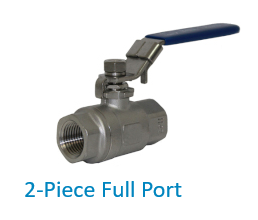
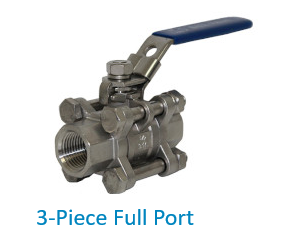
When to Choose a Full Port Ball Valve:
Full bore valves are suitable for applications that require maximum flow with a minimum pressure drop. Their larger internal diameter allows for an unrestricted flow which reduces the chance of build up and clogging making them suitable for slurries and suspension solutions with solid particles. They are also suitable for pipe lines that require ‘pigging’ thanks to the internal diameter remaining the same size as the pipe. They are typically larger and more expensive than reduced bore valves of the same nominal size
- ● For high flow rate systems where minimizing pressure loss is important
- ● When maintaining a constant flow rate is required
- ● When an unrestricted flow is required, with little to no resistance to the flow
- ● Where no restriction of the flow from the original pipe diameter is require
- ● When a straight flow path is required
- ● For fluids prone to cavitation the full bore prevents the formation of empty space
- ● For high viscosity fluids that need a unrestricted flow path to maximize flow
- ● For Slurries or suspension solutions where both solids and liquids will be flowing through the valve, the full port design reduces build up and clogging.
- ● Where minimizing wear and tear is important, no turbulence means less erosion
- ● For applications where ‘pigging’ (a type of pipeline cleaning) is required, as the full bore allows cleaning devices to travel through.

When to Choose a Standard Port Ball Valve:
Standard or reduced bore valves are suitable for applications with space limitations where a compact valve is easier to install. They are low cost making them popular for many applications where unrestricted flow is not essential and where a slight pressure drop is acceptable. Their smaller opening will restrict flow slightly which could increase the chance of build-up and clogging, when it comes to slurries and suspension solutions with solid particles. They are not suitable for applications that require ‘pigging’ due to their reduced internal diameter which is one size smaller than the pipeline. They are smaller and more in-expensive than full bore valves of the same nominal size making them ideal for applications where space is tight and a low cost is important.
- ● Where cost is a primary concern as standard port valves are typically cheaper
- ● When space is limited a compact valve body is easier to install in tight spaces
- ● In situations where a full flow is not required
- ● In applications where a slight pressure drop is acceptable
- ● Often used for light media like gasses or plain fluids like water (Non Viscous Fluids)
Benefits and features of full port and a reduced port valves:
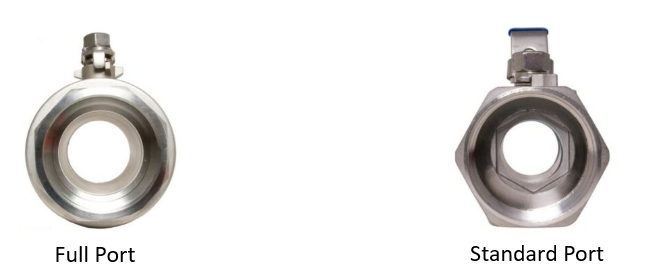
- Visual Inspection: when looking through the center of the valve body and the valve is open.
- ● Full Port: the flow path inside the valve body is the same diameter as the threaded end connections and the same as the pipe it will connect to.
- ● Standard Port: It has a visibly smaller internal opening that is smaller than the valves threaded end connections and has a ‘shoulder’ inside that decreases the diameter.
- Valve Body Size: refers to the difference in size of the valve body, between valves of the same nominal size. (For e.g. a 1” full port valve is larger than a 1” reduced port valve.)
- ● Full Port: slightly larger body to accommodate a larger spherical ball with a larger internal flow path.
- ● Standard Port: smaller, more compact and lighter body due to the smaller ball housed in the valve body.
- Installation Space: the space required to install the valve.
- ● Full Port: due to its larger volume it requires more space.
- ● Standard Port: due to its smaller volume and more compact body design it can be installed in small spaces.
- Bore Size: refers to the diameter of the hole in the ball, or the size of the hollow center in the spherical ball.
- ● Full Port: the bore size is the same as the pipe diameter, there is no restriction in the flow path. The inside of the valve will be a constant diameter.
- ● Standard Port: the size of the bore is smaller than the diameter of the pipe it connects to, there is a restriction in the flow path. The inside of the valve will have a visibly smaller opening, that will restrict the diameter between the threaded end connections.
- Flow Rate: refers to the volume that flows through the valve in a specific amount of time.
- ● Full Port: maximum flow rate. (Maintains a constant full flow rate used in applications where flow rate is critical.)
- ● Standard Port: lower flow rate. (Can be just as effective as full port valves in applications where a full flow is not required.)
- Pressure Drop: through a valve refers to the difference in pressure between the flow entering the valve and the flow exiting.
- ● Full Port: minimum pressure drop, because they have a larger internal diameter (ID) resulting in minimum restriction to flow which results in less resistance making it more efficient.
- ● Standard Port: higher pressure drop, due to the smaller opening with a reduced internal flow path which causes a restriction in the flow and more resistance.
- Cavitation: is the formation of empty space caused by vapor bubbles forming and quickly collapsing caused by a rapid drop in pressure.
- ● Full Port: low chance of cavitation, due to the larger internal diameter which minimizes flow restriction and thereby prevents the quick pressure drop that can trigger cavitation bubble formation.
- ● Standard Port: a significant pressure drop can lead to the formation of vapor bubbles that can cause cavitation.
- Flow Path: is the path the flow takes through the valve passing though hollow center or the bore of the spherical ball.
- ● Full Port: has a strait uninterrupted flow path resulting in little to no wear on the valve.
- ● Standard Port: the flow path is interrupted by a smaller opening or ‘shoulder’, when the flow passes though the reduced bore, which creates resistance to the flow.
- Flow Coefficient (Cv): of a valve indicates how much flow can pass through a valve under specific pressure conditions. (it is a numerical value representing the flow capacity of the valve.)
- ● Full Port: have a low flow coefficient similar to that of a straight pipe. This means it has a minimal resistance to flow which results in a low pressure drop.
- ● Standard Port: have a higher flow coefficient. This means it causes more resistance to flow which results in a larger pressure drop.
- Media : is the product flowing through the pipe and the valve, it can be a solid, liquid or a gas.
- ● Full Port: good for viscous fluids that flow slowly due to internal friction in the liquid like glycerin and oils.
- ● Standard Port: good for light media like gasses or plain fluids like water.
- Slurry (Suspension): is a mixture of both solid and liquid substances where the particles are suspended in the liquid but do not dissolve.
- ● Full Port: good for both solids and liquids or slurries. The open full port design reduces build up as there is no resistance to the solid particles.
- ● Standard Port: generally not ideal for applications with both solids and liquids. The narrower flow path can lead to build up and clogging when dealing with viscous liquid or solid particles.
- Pigging: in a valve refers to the process of using a cleaning device called a “pig” to clean the inside of a pipe line without stopping the flow.
- ● Full Port: is suitable for ‘pigging’ due to its full bore design where the diameter of the internal bore is nearly the same size as the pipe, which allows the ‘pig’ to freely pass through the valve.
- ● Standard Port: is not suitable for ‘pigging’ because the smaller internal diameter of the reduced port would obstruct the path of the ‘pig’ thereby preventing the effective cleaning of the pipeline.
- Cost: the price of an individual valve.
- ● Full Port: has a larger body requires more raw material for manufacturer resuling in a relatively higher cost. However because of the valves efficient performance it is cost effective in the long term.
- ● Standard Port: smaller and more compact body design requires less raw material to manufacture resulting in lower costs.
 Click Here for Full Port ValvesClick Here for Standard Port Valves