Ball Valves vs. Gate Valves: Key Differences, Pros & Cons, and Best Uses
Ball Valves vs. Gate Valves: Key Differences, Pros & Cons, and Best Uses
An industrial valve is a mechanical device used to control the flow of fluids by opening, closing or adjusting the size of the valve opening. There are a wide range of liquids and gasses or even loose materials that flow through industrial piping systems. Sometimes, these liquids and gasses are hazardous or corrosive, the pressures high and the environments harsh. This is the reason why there are so many industrial valves each specifically designed for different applications.
What is a Valve?
Valves are devices that control the flow of fluids, like gases or liquids, by opening or closing the pipeline. They can also manage the flow rate by adjusting the size of the opening that the flow passes through.
The main functions of Valves include:
- Opening or closing the flow: Valves are primarily used to open (start) or close (Stop) the flow of a fluid.
- Pressure Regulation: they can adjust the flow rate thereby regulate the pressure in a pipe
- Flow Rate Regulation: by a process of “throttling” where the size of the valve opening is adjusted to control flow rates.
- Flow direction: they can manage the direction of the flow. (particularly check valves which allow flow in one direction only)
- Safely Regulation: by relieving a vacuum or pressure build up they can improve safety condition in a system
What is a Shut Off Valve?
A shut off valve is a type of valve that is used to completely open or completely close the flow of a liquid or gas in a piping system by turning off a lever. There are many types of shut off valves depending on what function they offer.
The main functions of Valves include:
The most common types of shut off valves:
- Ball Valves: use a rotating ball with a hole through it, which allows fluid to pass through when aligned with the pipe.
- Gate Valves: use a gate or wedge that moves into the flow path by turning the handwheel.
- Butterfly Valves: use a rotating disc mounted on a rod that starts or stops the flow when turned.
- Needle Valves: use a plunger that moves up and down a small port to control the flow.
- Check Valves: use a hinged or spring loaded disc to allow flow in one direction only.
What is a Ball Valve?
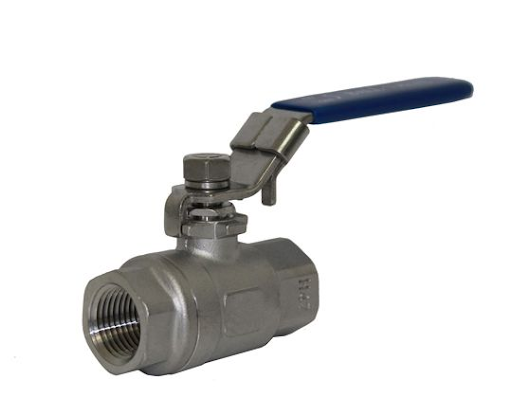
A ball valve uses a hollow, rotating ball positioned in the valve’s body. Rotating this ball controls the flow of the gas or liquid. The fluid flows through the valve when the pipeline and the hole in the ball are aligned. As you rotate the ball 90 degrees, the surface of the ball obstructs the flow. It is a valve. The valve is operated by a quarter-turn operation or a 90-degree turn of the handle.
What is a Gate Valve?
A gate valve uses a gate (or wedge) that is raised or lowered to open or close the flow path. The wedge or gate moves perpendicular to the flow.
Key Differences Between Ball Valves and Gate Valves
Ball Valve Design
A ball valve design features a spherical ball with a hole or bore through its center. The valve has the following components:
- Body: It is the main part of the valve that houses the internal components and connects to the piping system.
- Ball: The spherical ball with a hole in the center which controls the flow.
- Stem: It connects the handle or actuator to the ball.
- Handle or Actuator: Used to operate the valve.
- Seats: It is a sealing surface that the ball rests on and prevents leakage.
- End Connections: These connections connect the valve to the piping system.
- Packing: This sealing material around the stem prevents leakage around the stem.
- Bonnet: It is the part of the valve body that encloses the stem and packing. The bonnet provides extra protection from leakage.
There are three main types of threaded ball valves which include the one-piece, two-piece, and three-piece ball valves.
One-PieceA one-piece consists of one single body piece. It is not designed to be easily disassembled for maintenance and must be removed from the pipe for repair.
Two-PieceThe two-piece valve uses two main body sections to house the ball. Both sections are threaded together. The valve can be disassembled for maintenance.
Three-PieceA three-piece valve consists of a center section and two end pieces. The center section houses the ball, seats and stem. This design makes it easy to assemble and disassemble for cleaning and maintenance.
Gate Valve Design
A gate valve design uses a wedge-shaped gate that moves perpendicular to the flow. A gate valve has the following components:
- Body: It houses the internal components and connects to the piping system.
- Gate: A wedge-shaped gate moves vertically to control the flow.
- Bonnet: It covers the internal components and provides access for repair and maintenance.
- Stem: The stem connects the actuator or handwheel to the gate.
- Handwheel or actuator: A handwheel or actuator allows you to operate the valve.
- Seat: The gate rests on the seat when the valve is closed. The seat prevents leakage by forming a seal when the valve is closed.
- Packing: It surrounds the stem to prevent leakage at the stem.
- Gasket: It prevents leakage at the joint between the bonnet and body by forming a tight seal.
Operation
Ball ValveA ball valve ball valve is a quick operation valve as you just need to turn the handle 90 degrees. Turning the handle 90 degrees fully opens or closes the valve. The valve is suitable for applications that require fast and frequent operation.
Gate ValveRaising or lowering the gate requires multiple turns of the handwheel which makes the valve operate slowly. A gate valve is suitable for applications which do not require quick operation. Such applications require complete flow isolation.
Applications
A ball valve is suitable for applications that require:
- Quick operation
- Flow control
- Tight sealing
- Frequent cycling
A gate valve is suitable for applications that require:
- Full flow isolation
- Slow operation
- Higher pressure
- Minimal pressure drop
| Ball Valve | Gate Valve |
|---|---|
| Water distribution | Water supply systems |
| Gas lines and fuel systems | Oil and gas pipelines |
| Oil and gas industry | Sewage systems and wastewater treatment |
| Chemical and petrochemical processing | Power generation plants |
| HVAC Systems | Mining operations |
| Pharmaceutical and food industries | Irrigation systems |
| Marine applications | Fire protection systems |
| Fire protection systems | Marine and offshore applications |
Pros and Cons
Ball Valve Pros
- Quick operation
- Excellent sealing
- Less prone to wear and tear in high-flow applications and, therefore, more durable
- High flow rates
- Suitable for water distribution, chemical processing, food processing, and a wide range of other applications
- Low maintenance
Ball Valve Cons
- Not suitable for precise flow control
Gate Valve Pros
- Complete flow isolation
- Low-pressure drop
- Suitable for sewage systems, municipal water supply, and other high-pressure systems using large-diameter pipes
- Easy to operate and maintain
Gate Valve Cons
- Slow operation
- Limited throttling capability
- Potential for leakage
- Requires higher maintenance
- Require more vertical space
Conclusion
Both valves are well suited for specific uses depending on the application and it is up to the end user to determine which one will work best.