
Type 1, 2, 3 Piece Ball Valves ? Choosing the Right One for Your Needs
Type 1, 2, 3 Piece Ball Valves ? Choosing the Right One for Your Needs
When looking for ball valves online, people find many options, such as valves that can be controlled by hand or machine. Some are made of brass, others of stainless steel, some with flanges, others with NPT threads, etc. With all these choices, how can you know which one is right for you? Your specific use will help you decide, but knowing the basics about the various valves available is good. In the following blog, we will discuss all the factors to clarify the choices you should make in selecting the best ball valves ss..
Understanding Ball Valve Basics
What are ball valves, and how do they work?
Ball valves are mechanical devices designed to regulate the flow of fluids or gasses in pipelines. They consist of a spherical closure (the "ball") with a hole bored through the center. By rotating the ball a quarter turn with the valve handle, the hole can be aligned with the pipe, allowing flow or perpendicular to stop it entirely. This simple yet effective mechanism makes ball valves ideal for on/off control applications where quick, reliable operation is essential.
Benefits of using ball valves: Briefly list the advantages compared to other valve types.
-
Efficiency: Ball valves offer rapid operation, allowing for swift adjustments in flow.
-
Reliability: Their design ensures tight shut-off, minimizing leakage and providing long-term performance.
-
Versatility: Suitable for various industries and applications, from residential plumbing to industrial processes.
-
Durability: Constructed from robust materials like brass, stainless steel, or PVC, ball valves withstand harsh conditions and ensure longevity in service.
Demystifying Ball Valve Types
Ball valves are crucial in fluid control, but understanding the different types can be challenging. Let's break it down:
Type 1 Piece Ball Valve:
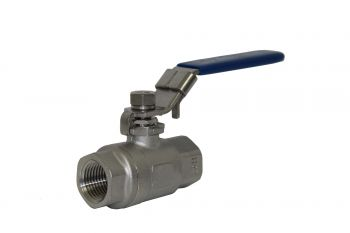
A 1-piece ball valve is a type of valve where the body of the valve is made from a single piece of material. This construction minimizes potential leak points and enhances durability. It typically features a simple design with a single chamber and is commonly used for applications where space is limited or cost-effectiveness is a priority.
-
One-Piece Body Construction: Simplifies design, enhancing durability and minimizing potential points of failure.
-
Advantages:
-
Lower Cost: Type-1 valves are generally more budget-friendly and suitable for cost-sensitive projects.
-
Simplicity: Easy installation and operation, ideal for applications where straightforward functionality is sufficient.
-
-
Limitations:
-
Non-Repairability: Due to their construction, Type-1 valves are typically not designed for repair, necessitating replacement if damaged.
-
Potential Leakage Concerns: Seals in Type-1 valves may degrade over time, increasing the risk of leakage if not maintained or replaced periodically.
-
Type 2 Piece Ball Valve:

A 2 piece ball valve is a common and cost-effective option for controlling flow. It features two body parts that screw together, housing a hollow ball that rotates to open or close the flow path. This simple design makes it reliable and easy to maintain.
-
Two-Piece Body Construction: Allows for threaded or bolted connections, enhancing versatility.
-
-
Advantages:
-
Affordability: Cost-effective option suitable for various applications.
-
Repairability: Can be disassembled for maintenance or repairs.
-
More comprehensive Pressure Rating Options: Offers flexibility in pressure ranges.
-
-
Limitations:
-
Compared to Type-3, It may require more maintenance and have additional potential leak points.
-
Type 3 Ball Valve:
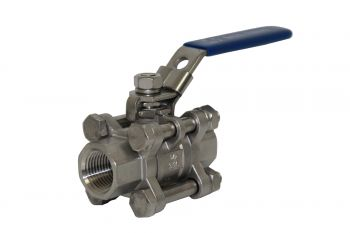
A 3 piece ball valve offers increased maintainability compared to its 2 piece counterpart. Its body separates into three sections, allowing for easier access to the internal ball and sealing components. This makes it ideal for situations requiring regular cleaning or repairs without needing to remove the entire valve from the pipeline.
Advantages:
-
Three-Piece Body Construction: Allows for easy maintenance and rebuildability with bolted connections.
-
Superior Ease of Maintenance: Simplified disassembly for cleaning or repairs.
-
Rebuildability: Enables maintenance or replacement of internal components without removing the valve from the pipeline, minimizing downtime.
Choosing the Right Ball Valve
Selecting the appropriate ball valve depends on various factors tailored to your project requirements:
Identifying your project needs:
-
Application: Determine if the valve will be used for water, gas, chemicals, etc.
-
Maintenance requirements and accessibility: Assess how easy it is to maintain and access the valve for repairs.
-
Budgetary constraints: Balance cost with quality to ensure the valve meets your project's financial parameters.
When to choose a Type 1 ball valve:
-
Small Space Applications: Ideal for situations where a small compact valve will be useful such as in tight spaces.
-
Robust Applications: Ideal for situations where a strong durable valve is required.
-
Budget Constraints: Type 1 ball valves offer a cost-effective solution for projects with limited financial resources.
When to choose a Type 2 ball valve:
-
Affordability: Offers a cost-effective option.
-
Repairability: Allows for easier maintenance.
-
Wide Pressure Range: Suitable for moderate pressure applications.
-
Versatility: This can be used across various industries.
-
Moderate Maintenance Needs: Requires maintenance but less frequently than other types.
When to choose a Type 3 ball valve:
-
Ideal for Wide Pressure Range: Designed to withstand Wide Pressure Range, making them suitable for critical systems.
-
Easy Maintenance: Three-piece body construction with bolted connections enables straightforward maintenance.
-
Re Assemble:Allows quick reassemble without removing the valve from the pipeline, minimizing downtime.
Conclusion
Selecting the suitable ball valve involves considering various factors, such as your specific project needs, budget constraints, and maintenance requirements.
Understanding the basics and advantages of ball valve types is crucial in making an informed decision.
Whether it's for low-pressure, non-critical applications (Type 1), affordability and repairability (Type 2), or high-pressure critical systems requiring easy maintenance and rebuildability (Type 3), choosing the appropriate valve ensures efficient fluid control and long-term performance.
Stay tuned for our upcoming blog to clarify the best choices for selecting the optimal ball valves.